Surviving a Southwest Florida summer without car air conditioning feels less like an inconvenience and more like a true emergency.
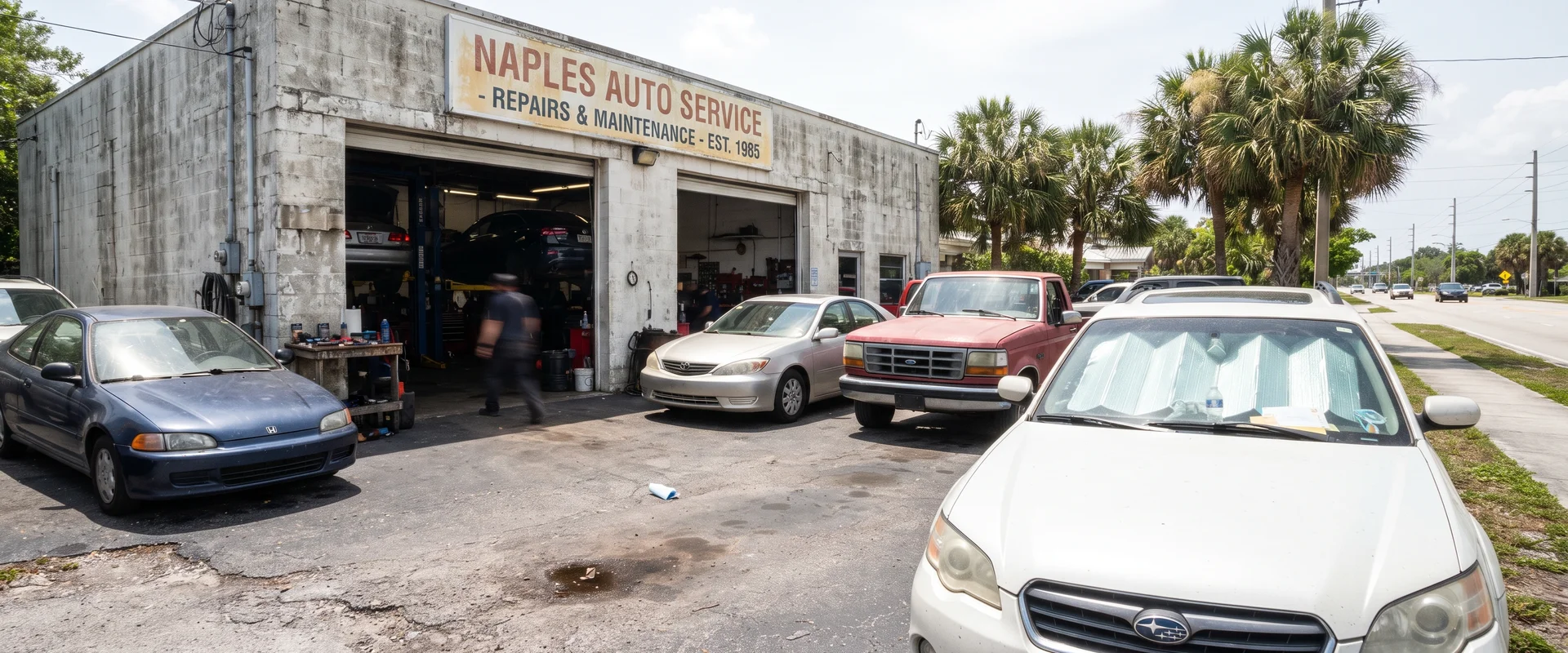
Our professional service team treats these situations with absolute urgency. For reliable Auto AC Repair, Pinto’s Auto Repair diagnoses and fixes the full climate control system. We handle refrigerant recharges, UV dye leak detection, AC compressors, condenser units, evaporator cores, thermal expansion valves, and heater cores. It’s the same fair, no-upsell standard we apply to every job at our Naples auto repair shop.
The process is simpler than you might think.
We are going to walk you through exactly how these systems work and how to keep them running ice cold. Grab a quick cup of coffee, and let’s look at the details together.
What does auto AC repair involve?
The single most useful thing to understand about your car’s AC is that it operates as a completely sealed system. Refrigerant is never consumed the way oil or fuel is burned. So when a system runs low on R-134a or R-1234yf, a leak definitely let that gas out.
We refuse to simply top a system off and wave you on your way. A blind recharge acts as a temporary fix that you will end up paying for again. Our technicians know that fixing the leak once saves you money in the long run.
The True Cost of Refrigerant
As of 2026, the price difference between older and newer refrigerants is significant. We want you to understand exactly what goes into your vehicle and why it costs what it does. Newer vehicles built after 2017 typically require R-1234yf to meet updated environmental standards.
Our shop uses specialized machines to handle this newer gas safely. This mandatory shift impacts your repair bill directly, because R-1234yf costs significantly more per pound than the older R-134a.
| Feature | R-134a Refrigerant | R-1234yf Refrigerant |
|---|---|---|
| Typical Vehicle Age | Most cars built before 2015 | Most cars built 2017 and newer |
| Average 2026 Cost | $20 to $30 per pound | $80 to $130 per pound |
| Environmental Impact | High global warming potential | Dramatically lower impact |
| Average Recharge Bill | $150 to $300 | $300 to $500 |
Our Diagnostic Process
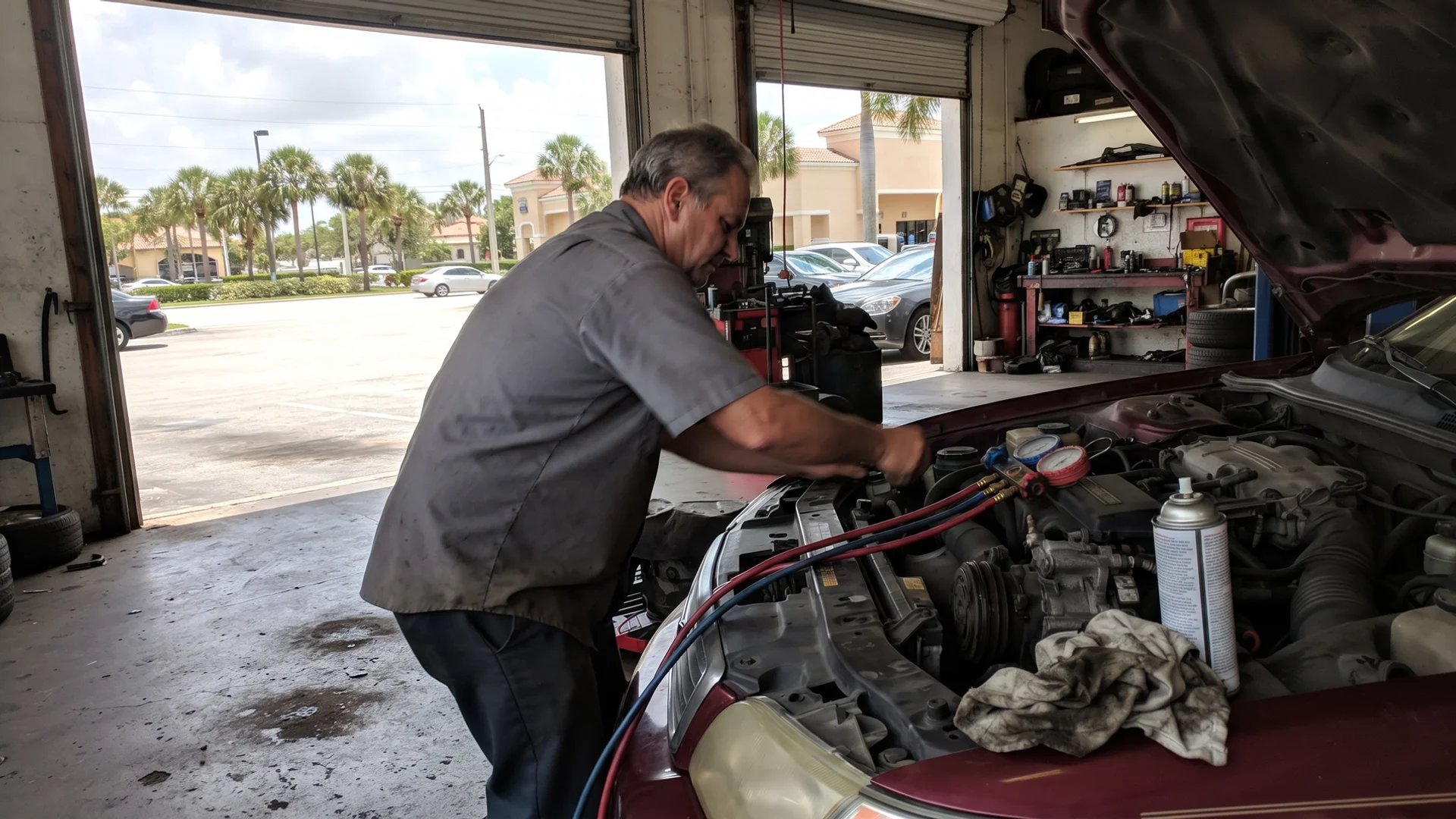
Diagnosis always starts with precise measurements. We check the high and low side pressures against the exact manufacturer specifications. The next step involves measuring the actual vent temperature to establish the cabin cooling drop.
We watch the compressor clutch engage, cycle, and confirm the cooling fan is running properly. These initial readings usually tell the technician within minutes whether the issue is a charge problem, a mechanical failure, an airflow restriction, or an electrical fault. Our target is to see vent temperatures hit a chilly 40 to 45 degrees Fahrenheit on a typical summer day.
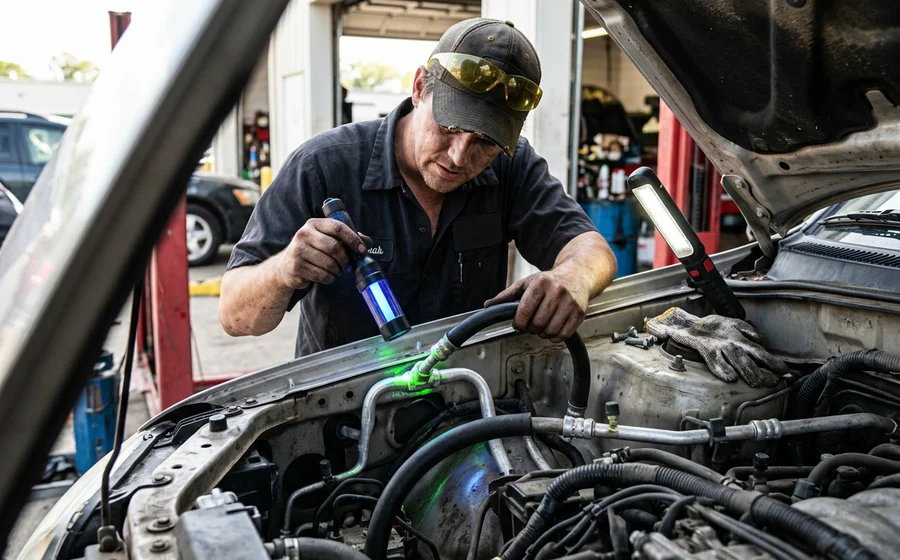
If the system shows a low charge, the next step is finding the escape route. We use UV dye leak detection to locate the exact source of the problem. This special dye circulates with the refrigerant oil and glows brightly under a UV lamp.
We frequently find leaks at an O-ring on a line fitting, a corroded condenser, a cracked hose, or the compressor shaft seal. On coastal vehicles from Marco Island, condenser corrosion shows up constantly. Our inspections often reveal this damage because the condenser sits at the very front of the car, catching all that salt-laden beach air.
Once the damaged component is repaired, the system requires evacuation with a vacuum pump. We pull all the moisture out of the lines, as skipping this step is a terrible shortcut. Any moisture left inside an AC system will form an acid that literally eats the compressor from the inside out.
We then recharge the system to the exact factory weight. The final step involves measuring that vent temperature one more time before handing the keys back. Our strict process ensures the cooling result is verified rather than just assumed.
Common AC problems we solve
You will quickly notice when your climate control stops working properly. We see a few recurring patterns in the shop every single week. Here are the most frequent issues that bring local drivers through the doors:
- Cold at highway speed, weak at a stoplight. This points to airflow across the condenser, not a low charge. We usually find a failing cooling fan or a condenser blocked by road debris. A fan that isn’t commanded on can also be an electrical fault, which is where engine diagnostics picks up the trail.
- Cold for a few weeks after a recharge, then warm again. A hidden leak causes this exact symptom. Our technicians commonly spot these failures at O-rings, the receiver-drier connection, or the compressor shaft seal.
- A loud rattle or squeal when the AC switches on. This sound signals compressor clutch or bearing trouble. We highly recommend catching this early, because an internal compressor failure will contaminate the entire system with metal shards.
- A musty smell and foggy windows. This combination means moisture is trapped in the evaporator core. We recommend checking the passenger floor for sticky coolant, which indicates a leaking heater core.
Why the Naples climate is hard on AC systems
Southwest Florida weather pushes vehicle cooling components to their absolute limits. We know that long humid summers force the system to run at close to full load for most of the year. Naples regularly sees August temperatures hovering around 90 degrees Fahrenheit, and the intense humidity pushes the heat index near 100 degrees. Our local climate causes components that might last a decade in a dry northern state to fail here in half that time.
Adding salt air along the coast and stop-and-go idling on Collier Boulevard creates a workload most AC systems were never designed to handle. We require all technicians to be EPA Section 609 certified to handle refrigerants to strict federal standards. This certification ensures your vehicle is repaired safely without venting harmful gases into the atmosphere.
Our repair process always ends with the vent temperature displayed on a calibrated gauge. A simple hand held in front of the dash is never enough to guarantee your family stays comfortable in the Florida heat. We treat every vehicle like it belongs to our own family.
Schedule Your Auto AC Repair Today
Driving around Naples with warm air blowing from the vents is a miserable experience.
We want to help you get back to enjoying a cool, comfortable commute. The longer a failing system runs, the more expensive the final repair tends to be.
Our team is ready to test your pressures, find any hidden leaks, and restore your cabin climate. Give Pinto’s Auto Repair a call today to schedule your comprehensive Auto AC Repair diagnostic check.