What does brake service actually involve?
When your brakes squeal, grind, or feel soft underfoot, safety stops being negotiable. Pinto’s Auto Repair handles the full range of brake work: ceramic and semi-metallic brake pad replacement, rotor resurfacing and replacement, brake caliper service, DOT 3 and DOT 4 brake fluid flushes, and brake line repairs. It’s one part of the honest auto repair in Naples we’ve built the shop around since 2018.
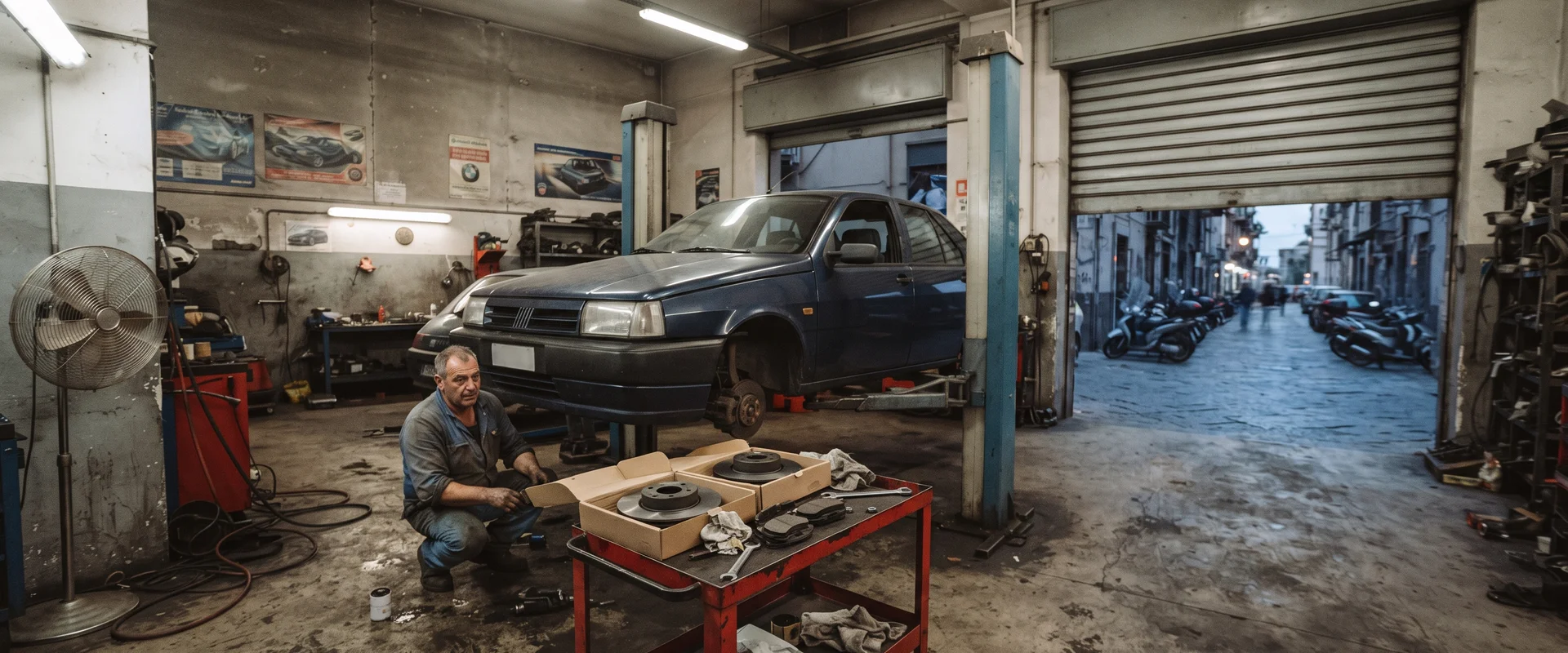
The difference between a good brake job and a bad one is measurement. Before quoting anything, we pull the wheels and measure pad thickness with a gauge and check brake rotors for runout and thickness variation. Those two numbers tell us whether you need pads only, pads and rotors, or something further into the system. Guessing from the outside is how people end up paying for rotors that were still perfectly serviceable.
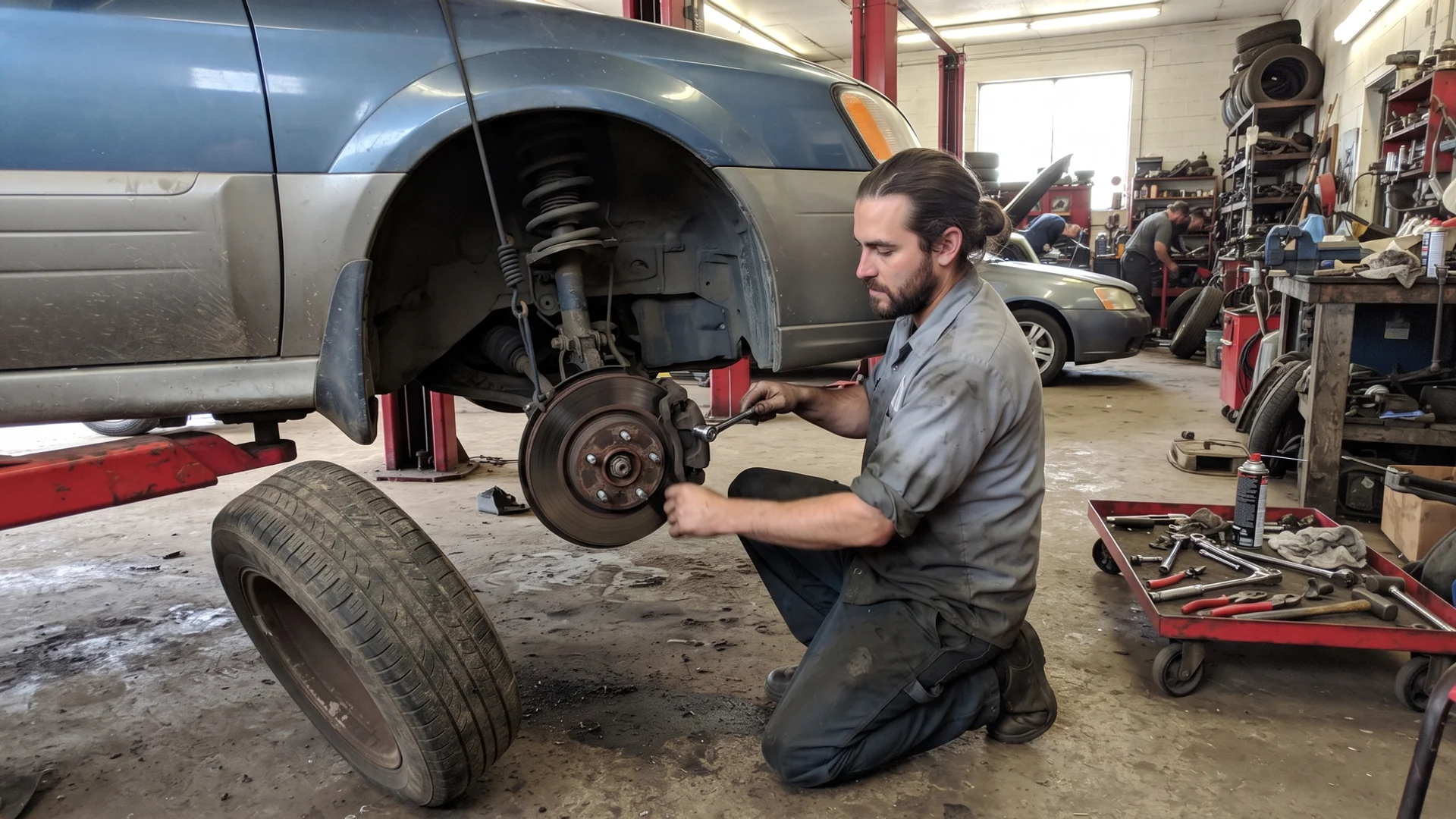
We also look past the pads. A sticking brake caliper will chew through a brand-new pad set in a few thousand miles, so slide pins get cleaned and lubricated and caliper function gets checked as part of every job. Brake hoses get inspected for bulging and cracking. Fluid gets checked for moisture content, which matters more in Florida than almost anywhere else, because humid air is what shortens the boiling point of brake fluid and causes brake fade on a hot afternoon. If the master cylinder or the ABS sensor circuit is involved, we find that during diagnosis rather than after you’ve already paid for pads.
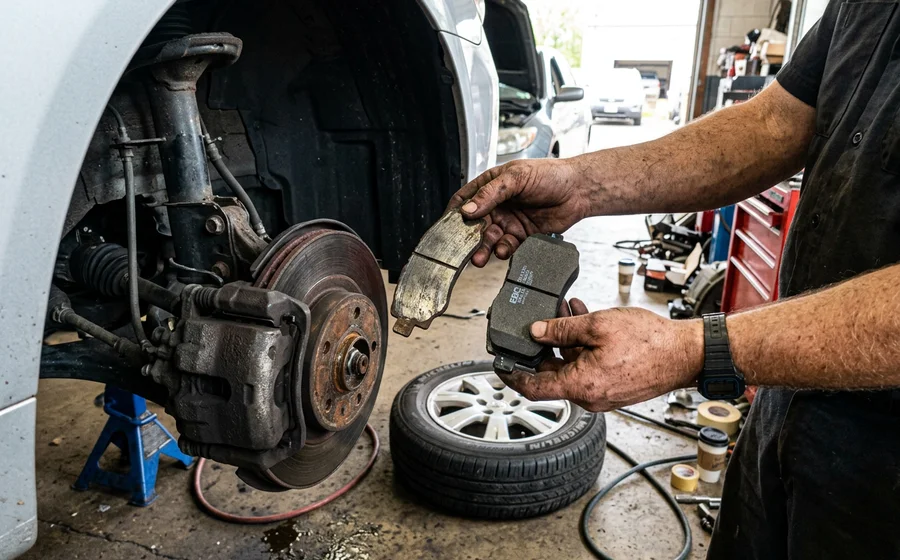
Then we show you. The worn part comes out and sits on the counter where you can see it, next to a new one for comparison. You get a written estimate with parts and labor itemized, ranked by urgency, so you know what has to happen this week and what can safely wait until next month. No scare tactics, no upsells.
Common brake problems we solve
Squealing that turns into grinding. The squeal is the wear indicator doing its job. The grind is metal on metal, and by then you’re usually replacing rotors too. Coming in at the squeal stage is what keeps a $150 job from becoming a $400 one.
A pedal that pulses under your foot. This is almost always rotor thickness variation, often from heat cycling in stop-and-go traffic along Golden Gate Parkway or Collier Boulevard. Depending on remaining thickness we either machine the rotors flat or replace them.
A soft or sinking pedal. Pads don’t cause this. It points to old fluid, a failing hose, a leaking caliper, or a tired master cylinder. It’s a system problem, and it needs a proper diagnosis rather than a pad swap.
Pulling to one side when braking. Usually a seized caliper or a collapsed brake hose on one side. On coastal vehicles from Marco Island, corrosion in the brake line or caliper is a frequent culprit. If the car also wanders when you’re not braking, the cause is more likely front-end wear, which is a suspension and steering job rather than a brake one.
What’s included in every brake job
Every brake repair here includes a full safety assessment of the braking system, not just the corner you came in about. We check both axles, the fluid, the hoses, and the hardware, and we tell you plainly what we found. Pad thickness also gets measured at every oil change and preventive maintenance visit, which is usually how our regulars find out about brakes long before anything starts to grind. A new brake hardware kit with shims and clips is included with pad replacement rather than added as a separate line, because leaving out $12 of hardware is how a quiet brake job turns into a squeaky one.
We finish with a road test and a proper bed-in procedure so the friction material transfers evenly to the rotor surface. That’s what gives you a firm pedal and a consistent, predictable stopping distance from day one.